
Hello memoirists,
I wanted to share the recording of our recent author Q&A. I think it will be especially meaningful for those of you writing about trauma or painful parts of your life. (Also find a summary of the book club discussion below.)
Watch here: https://youtu.be/DgS9D8PQCRY?si=ZgGrf9ViBDbvrZKI

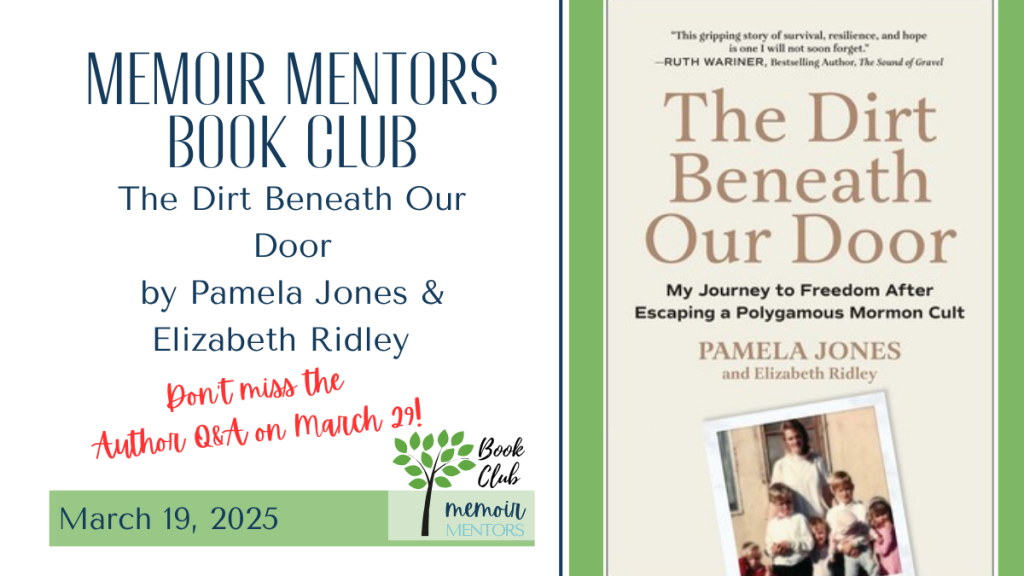
In this conversation, I spoke with Pamela Jones and Elizabeth Ridley about The Dirt Beneath Our Door, Pamela’s memoir about growing up in a polygamous fundamentalist community in Mexico, raising children under extreme circumstances, and ultimately finding the courage to leave and rebuild her life.
A few themes that stood out:
- Writing about trauma without becoming overwhelmed by it
Pamela speaks honestly about what it took to revisit painful experiences and how she approached writing them in a way that was truthful but also sustainable. I love how she talks about looking back at the former versions of herself with tenderness. - Finding the balance between honesty and protection
We discuss what it means to tell the truth while also considering the people in your life and how to make those decisions with care. - Turning lived experience into a narrative that readers can connect with
Warmly,
Christina
Memoir Mentors
Quick reminder:
If you’ve read our anthology, The Day That Changed Everything and haven’t left a review yet, it really does help — even a sentence or two. Here’s a link to places where you can leave reviews – I’m also including a printable collection of memoir writing prompts as a thank you:
https://memoirmentors.com/review
Warmly,
Christina

Next Book Club Choice: Finding My Way by Malala Yousafzai
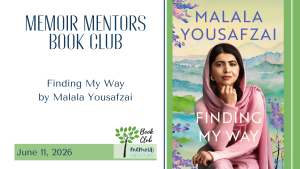 Join us for a craft-focused conversation on June 11 about Finding My Way by Malala Yousafzai.
In the Memoir Mentors Book Club, we explore memoirs through a writer’s lens. We go beyond the surface of the stories. We dissect memoirs, identifying elements we can integrate into our own writing and those we might want to steer clear of. Our discussions center around the strengths and weaknesses of the writing, providing valuable insights for enriching our writer toolboxes.
Book club questions can be found here (when I get around to writing them): https://memoirmentors.com/book-club-questions/
Come to the book club ready to share your thoughts, reactions, and questions (even if you haven’t read the book). We’ll gather those to shape the conversation with the authors.
About the book:
How do you rebuild yourself when your whole world changes overnight?
Thrust onto the public stage at fifteen years old after the Taliban’s brutal attack on her life, Malala Yousafzai quickly became an international icon known for bravery and resilience. But away from the cameras and crowds, she spent years struggling to find her place in an unfamiliar world. Now, for the first time ever, Malala takes us beyond the headlines in Finding My Way—a vulnerable, surprising memoir that buzzes with authenticity, sharp humor, and tenderness.
Finding My Way is a story of friendship and first love, of anxiety and self-discovery, of trying to stay true to yourself when everyone wants to tell you who you are. In it, Malala traces her path from high school loner to reckless college student to a young woman at peace with her past. Through candid, often messy moments like nearly failing exams, getting ghosted and meeting the love of her life, Malala reminds us that real role models aren’t perfect—they’re human.
In this astonishing memoir, Malala reintroduces herself to the world, sharing how she navigated life as someone whose darkest moments threatened to define her—while seeking the freedom to find out who she truly is. Finding My Way is an intimate look at the life of a young woman taking charge of her destiny—and a deeply personal testament to the strength it takes to be unapologetically yourself.
Book Club Summary: The Dirt Beneath Our Door

One thing that made me laugh about this discussion is that, although we rated the book at 4 stars, a lot of our conversation focused on what could have been improved. If you dropped into the middle of it, you might think we didn’t like the book at all—which isn’t true. We did. But as writers (and thoughtful readers), it’s often easier—and more useful for our own work—to analyze what could be strengthened than to discuss what is already working.
Beginnings and Literary Devices
The first chapter opened with a bang and pulled us all in. Most really liked this approach, but some found it frustrating that the narrative took so long to circle back to this moment, which brought up important questions about pacing and holding suspense without losing focus.
Chronology and “Too Much” Detail
After the flash forward at the beginning, the story goes back to the start and unfolds from there. While anchoring chapters by year helped orient the reader, several readers found the repetition and sheer volume of traumatic episodes overwhelming. We talked about how a relentless catalogue of abuse or hardship can desensitize the reader.
A valuable takeaway is that too many similar scenes can dilute their impact. This was a great reminder to assess whether each chapter or anecdote adds something new or if it is “a different version of the same song.”
Authenticity, Reflection, and Gaps
One prevailing theme was a desire for more reflection and emotional honesty. While the author painted herself as mature and resilient, some wished for more vulnerability or honest self-doubt. It’s a delicate balance—showing growth and grit without smoothing over the messy parts that make a narrator relatable.
We talked about how tempting it is to present ourselves as “the perfect child” or “the misunderstood victim,” but how readers crave nuance, conflict, and the gray areas in between. If you’re working on your own story, it might help to ask: am I showing both my strengths and my flaws? What inner struggles or ambivalences could I reveal more?
This led to a broader discussion of how important it is to admit uncertainty, resentment, or failure, and sometimes the most resonant scenes are those with honest ambivalence.
We reflected on the importance of beta readers, feedback, and letting future drafts shift to focus on clarity and emotional impact. Sometimes, what’s healing to write isn’t always what serves the book best in its final shared form.
Craft takeaways:
-
Bold openings can hook the reader, but be careful about keeping them waiting too long for narrative payoff.
-
Emotional vulnerability and complexity are crucial; readers want to see growth, contradiction, and struggle, not just perseverance. Don’t be afraid to show vulnerability.
- Be careful of using the same word too many times. Scrivener and ProWritingAid have features to help with this.
-
Beware of repetition—too many similar episodes may numb your audience instead of deepening impact.
- Feedback is your friend. Bring in second (third, fourth!) sets of eyes to find gaps, repetitions, and emotional truth.

Ideas? Questions? Suggestions?
 Reply to this email and let me know or reach out directly at: xtina.howell@memoirmentors.com